Barlist

- Service
- Product strategy and architecture
Making a catalogue of tens of thousands of spirits work on mobile, even offline.
Barlist brings search, personal collections, editorial content, places of interest and visual recognition together in one platform. Not a Monkey structured the product, designed its mobile architecture and organised delivery to turn this complexity into a high-performing, indexable system that can evolve.
Context
The project was about more than building a mobile app: it required a complete product platform around a rich catalogue of spirits, distilleries, regions, categories and editorial content.
The main challenges were mobile performance, fast search, offline use, data structure, SEO for public content and the ability to evolve the product without creating unmanageable technical debt.
Testimonial
« Jean-Charles supported us in structuring Barlist, helping us translate our product vision into technical choices and concrete development steps. His work on the mobile architecture, search, collections and public pages helped give the product overall coherence. This collaboration helped our team organise development more effectively and lay the foundations for Barlist’s future evolution. »
Translated from French.
Our work on product strategy and architecture
Step 1 - Product scoping
Clarifying user journeys, key features and product logic: discovery, search, collections, spirit pages, distilleries, bars, cocktails and editorial content.
Step 2 - Mobile architecture designed for offline use
Building a mobile application with Capacitor and Angular, designed to stay responsive with a rich catalogue, numerous images and partially offline use.
Step 3 - Advanced search and filters
Structuring a search system with hierarchical filters, facets, categories, regions and distilleries, with a path towards an offline experience approaching the capabilities available online.
Step 4 - SEO and public content
Creating a dedicated SSR architecture to make public pages indexable: spirits, distilleries, bars, cocktails, taxonomies and related content.
Step 5 - Visual recognition and dataset
Structuring an image dataset and integrating a visual recognition pipeline to prepare label-reading features and catalogue matching.
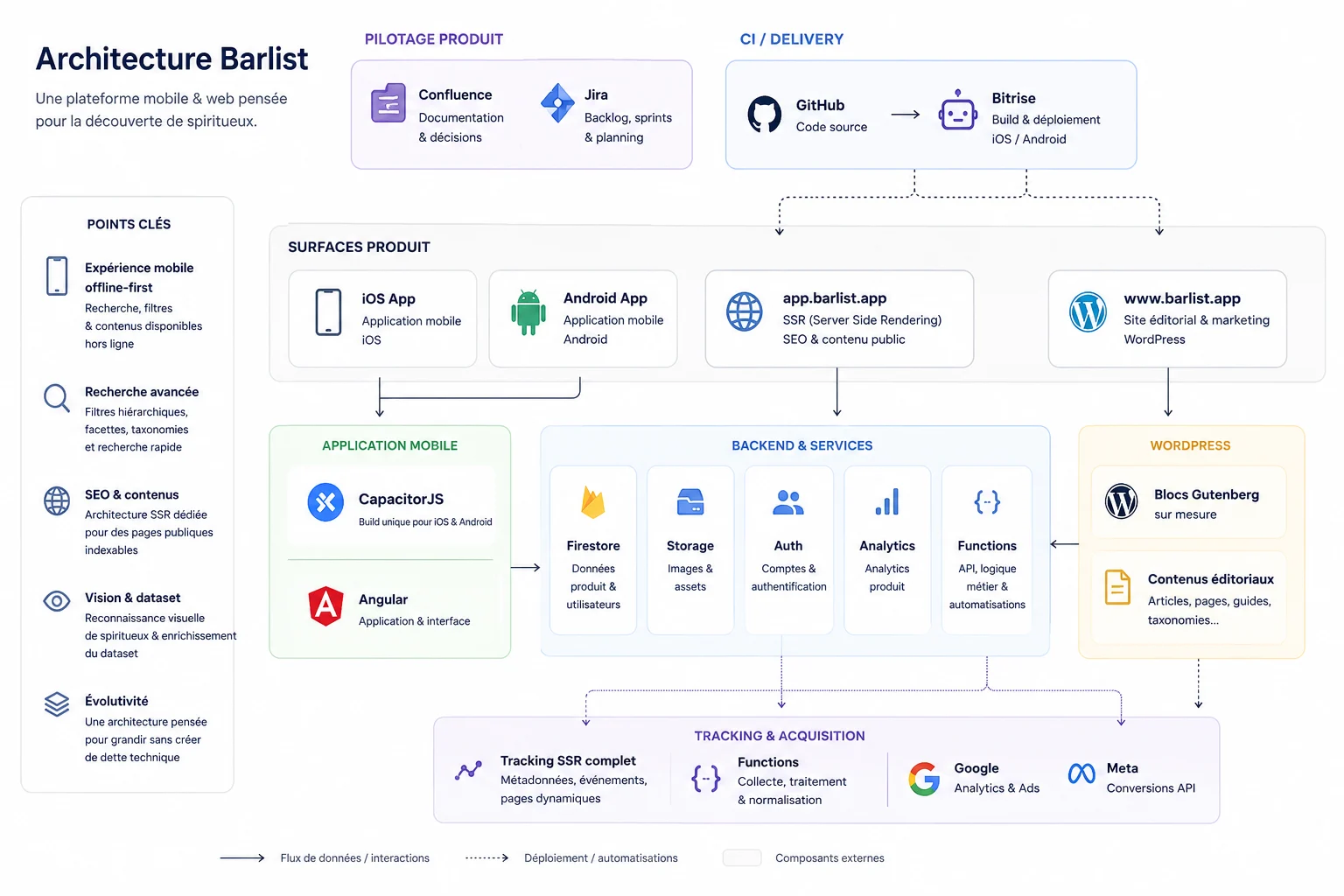
Product architecture and delivery
A mobile, SEO and editorial system structured around a shared product foundation.
Barlist uses a hybrid architecture: a CapacitorJS mobile app for iOS and Android, a dedicated SSR surface for SEO on app.barlist.app, and a WordPress editorial site on www.barlist.app. Firebase centralises product data, users, assets, analytics and automation through Functions. Jira and Confluence structure product management, while GitHub and Bitrise handle mobile CI.
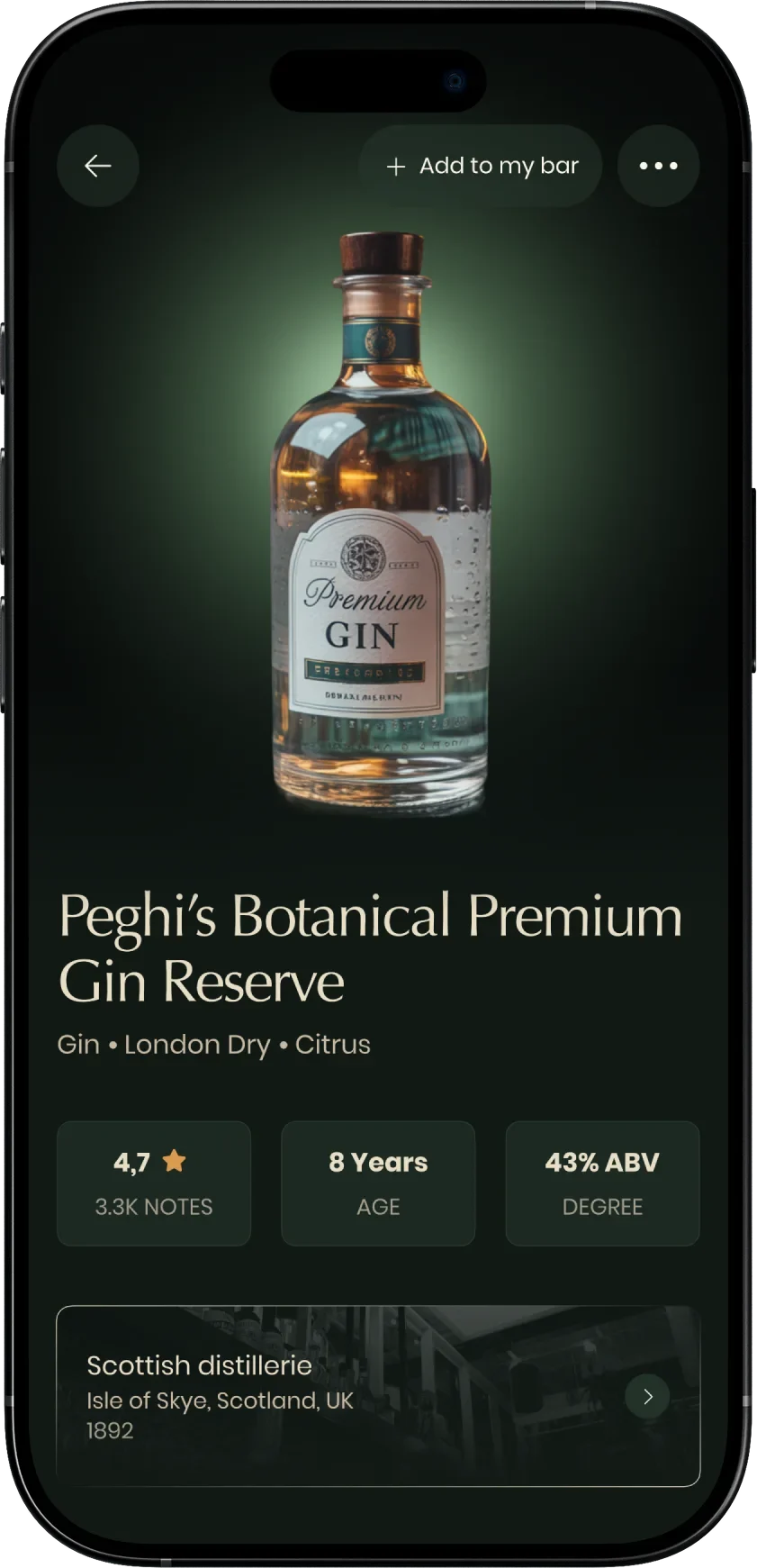
Immersive spirit pages
Clear, visual product information that is immediately useful.
Each page brings together a spirit’s key information: category, origin, age, alcohol content, ratings, distillery and personal actions. The aim was to make a dense catalogue readable on mobile while retaining the product’s premium and editorial character.
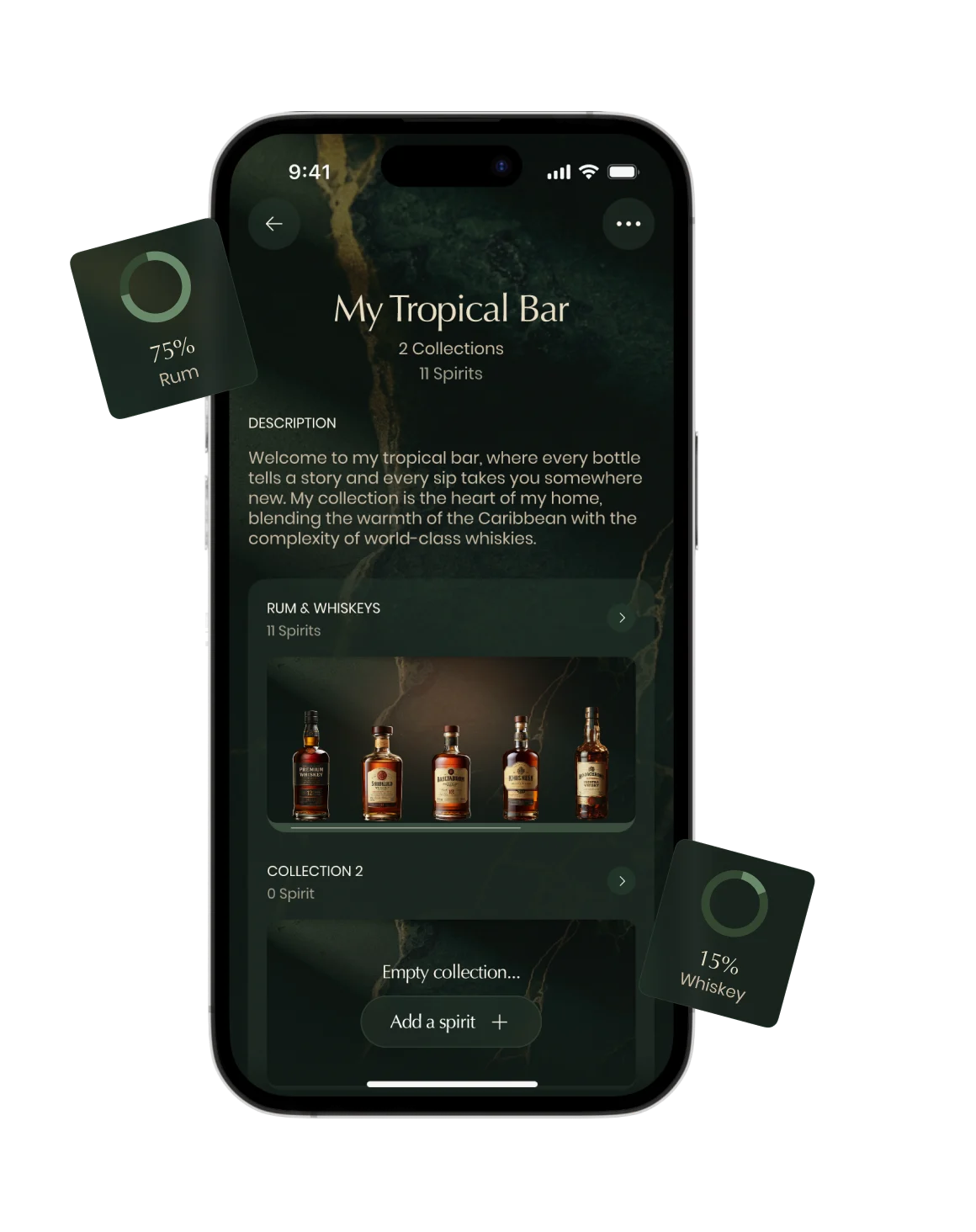
Personal collections
A space to organise your bar, wishlist and discoveries.
Collections give users a simple structure for organising bottles, tracking preferences and creating themed selections. This journey also prepares offline use and synchronisation of personal data.
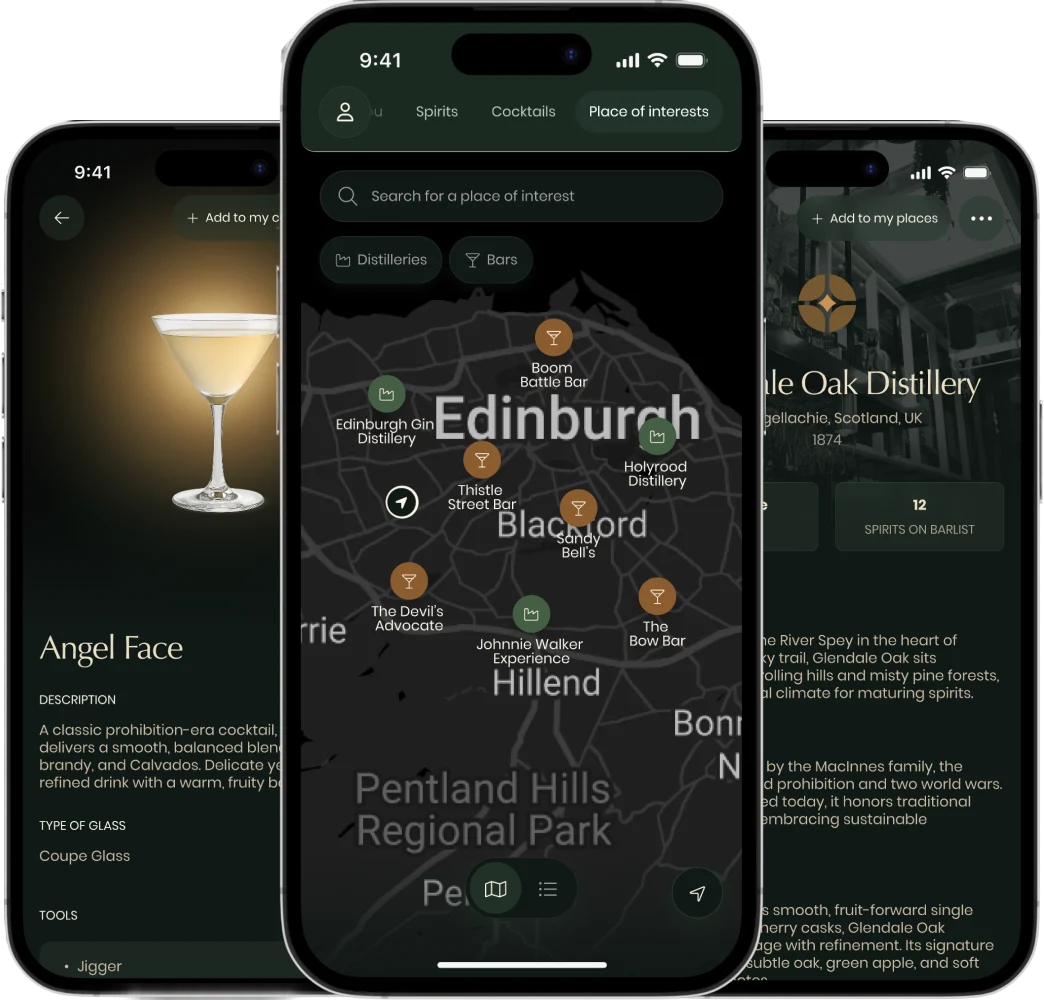
Map and places of interest
Location-based discovery of distilleries, bars and places connected to the product.
The map connects the catalogue to real places: distilleries, bars, points of interest and detailed pages. It turns the product database into a discovery experience, with filters and views suited to quick mobile searches.
Like Barlist, turn a complex product idea into a clear, high-performing mobile system that can evolve.
Product strategy and architecture