Reno.energy

- Service
- Delivery recovery and development
Giving the marketing team control and connecting the website to sales follow-up.
For Reno.energy, the challenge was to evolve the website at the pace of its offers and campaigns. We supported the marketing team in rolling out the new identity, managing its own pages and connecting website enquiries to the sales team’s tools.
Context
Reno.energy supports individuals, businesses and local authorities with energy renovation projects. Its website needs to explain the solutions, showcase completed projects and help everyone get in touch. The marketing team manages this content across several markets and languages.
With the previous website, changes to pages and presentation often depended on a developer. The team needed to roll out a new identity, update offers and prepare campaigns more independently. Visitor enquiries also needed to connect to sales work while the existing site evolved in stages.
Testimonial
« Jean-Charles supported us in evolving the Reno.energy website while taking our marketing needs into account. Today we can compose our pages, update our content and prepare our campaigns more independently, while respecting our new identity. Enquiries received through the website are also connected to our sales follow-up. Practical support that connects our needs to their implementation. »
Translated from French.
 Catherine Gazon Digital Marketing Manager Reno.energy
How we got there
Step 1 — Setting priorities with the team
We started by understanding day-to-day needs: which pages needed to change, which journeys needed improvement and which tools to keep. This helped us choose the first interventions and organise the rest of the redesign.
Step 2 — Applying the new identity to the website
Working with Reno.energy, we translated the new identity into reusable page blocks: service introductions, completed projects, frequently asked questions and contact points. These blocks maintain the same visual cues on desktop and mobile.
Step 3 — Enabling the team to manage its pages
Content was gradually moved into templates the team can use itself. It can assemble a page, edit text and images, manage translations and prepare a campaign. Elements of the old site that are still needed remain usable during the transition.
Step 4 — Passing enquiries to the sales team
Forms collect useful information: services of interest, contact details and a project description. Enquiries are then sent to the sales management tool. Transmission tracking identifies failures and allows retries, without treating a request as received simply because sending was attempted.
Step 5 — Protecting information entrusted to the website
The journey includes visitor consent, protected access to attachments and limited retention on the website. After the required transmissions, data that directly identifies a person is replaced by identifiers. Pending enquiries remain available for processing; the relevant form data is deleted after six months at the latest. This rule applies to copies managed by the website: sales records follow their own retention rules.
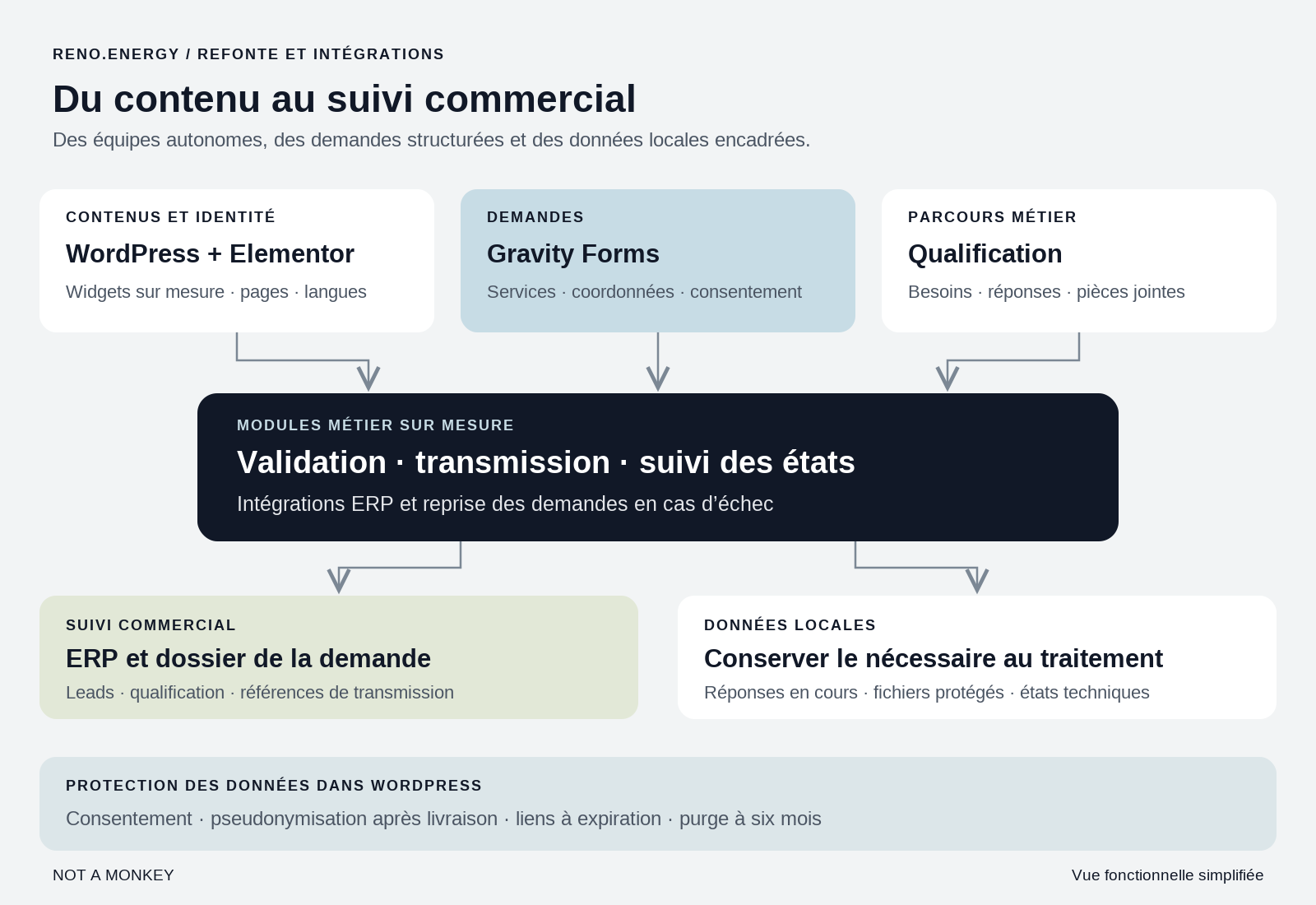
From first contact to sales follow-up
A journey connecting visitors and teams.
The marketing team publishes pages and offers. Visitors choose the services they are interested in, describe their project and provide contact details. Their enquiry then enters the sales team’s tool for follow-up. Each step accounts for the information needed for processing and its protection.
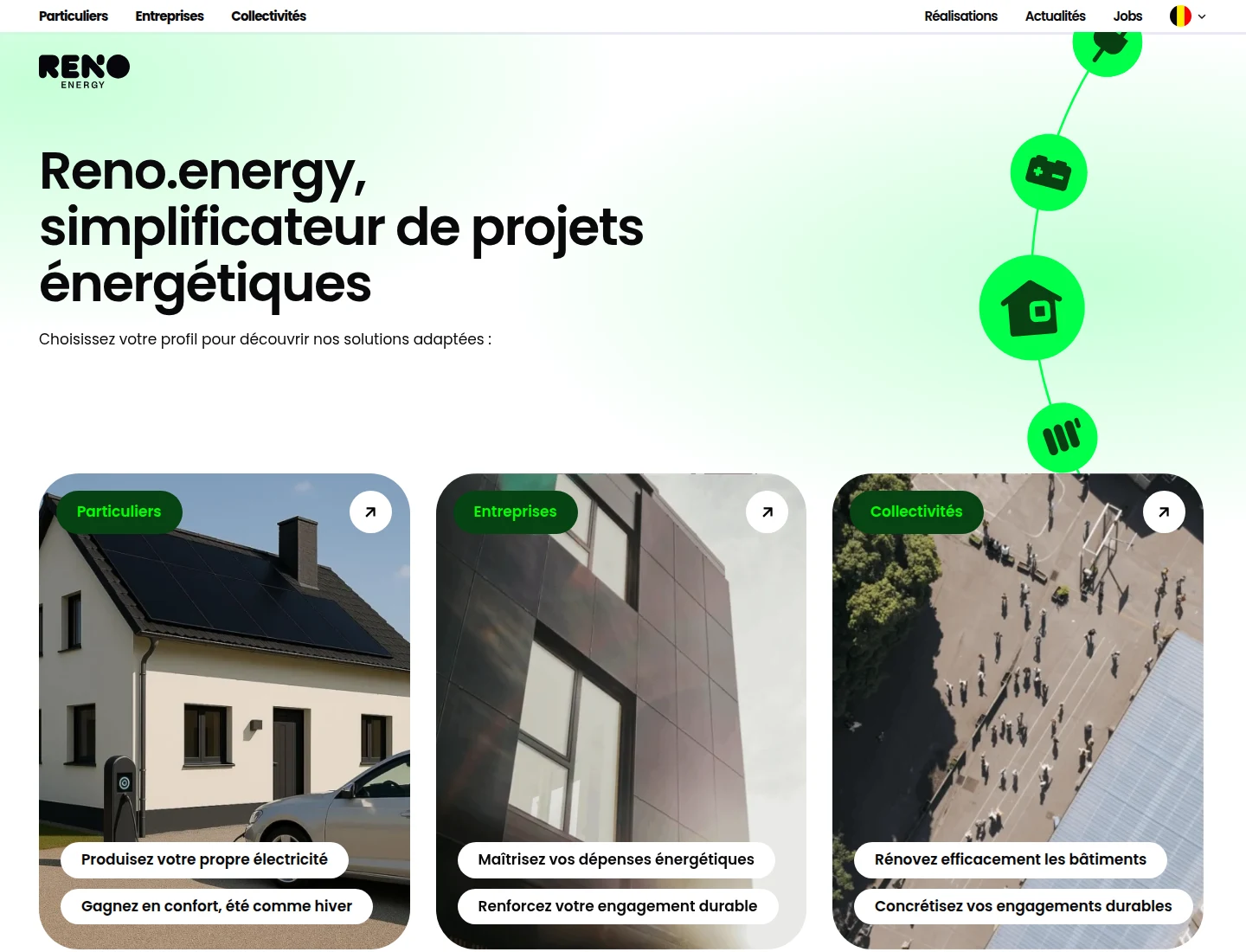
A new identity for several audiences
Distinct journeys for individuals, businesses and local authorities.
The homepage distinguishes individuals, businesses and local authorities to direct them to relevant offers. The colours, visuals and cues of the new identity carry through the different pages. Screenshot of the local site.
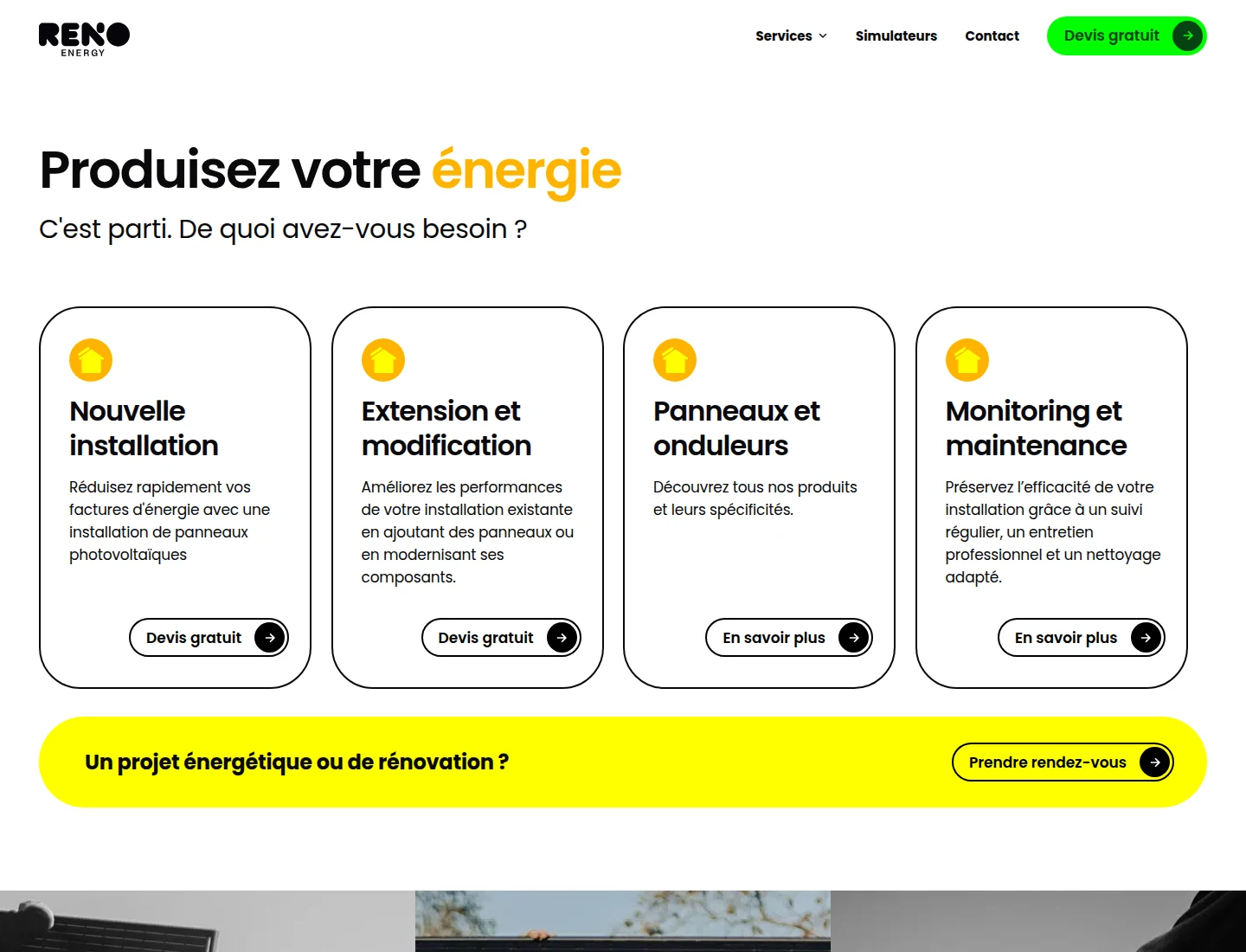
An independent team keeping its offers up to date
Page blocks the team can reuse.
To present an offer, the team has blocks ready to assemble: services, solutions, frequently asked questions and appointment booking. It can adapt the content while keeping the presentation consistent. The solar panel page shows how these elements guide visitors towards requesting a quote. Screenshot of the local site.
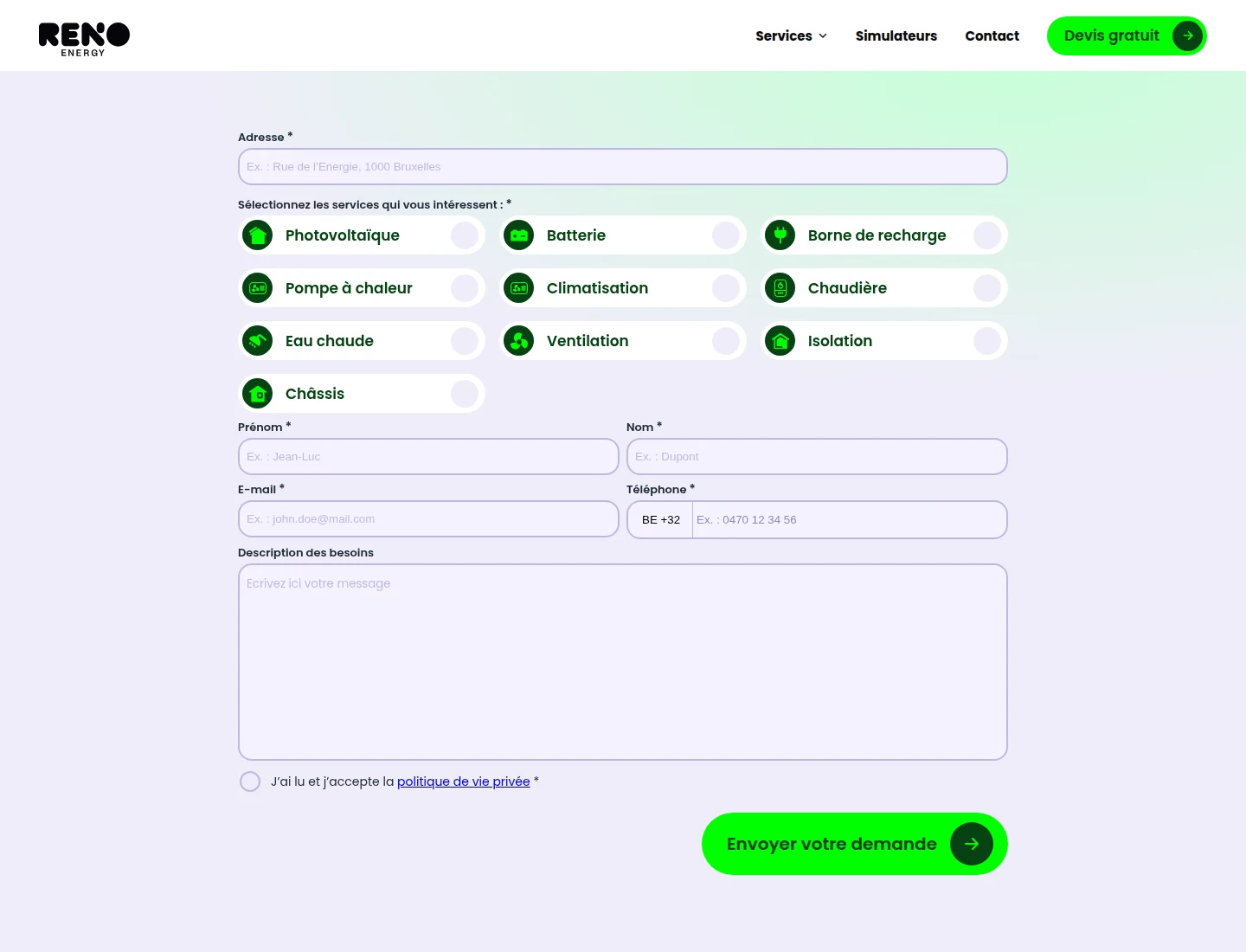
Structured enquiries for sales follow-up
Giving teams the information they need to take over.
The form gathers the project address, services of interest, contact details and the visitor’s needs. This information is connected to sales follow-up so the team can take over. Visitors are also informed about how their data is used. Screenshot of the local form before any information is entered.
Does your team depend on a developer for every new page or campaign? Like Reno.energy, evolve your website so you can manage it day to day and connect enquiries to sales follow-up.
Delivery recovery and development